Darling, Is It Real? The Savvy Collector's Guide to Hunting Down Authentic Vintage Pin-Up Treasures
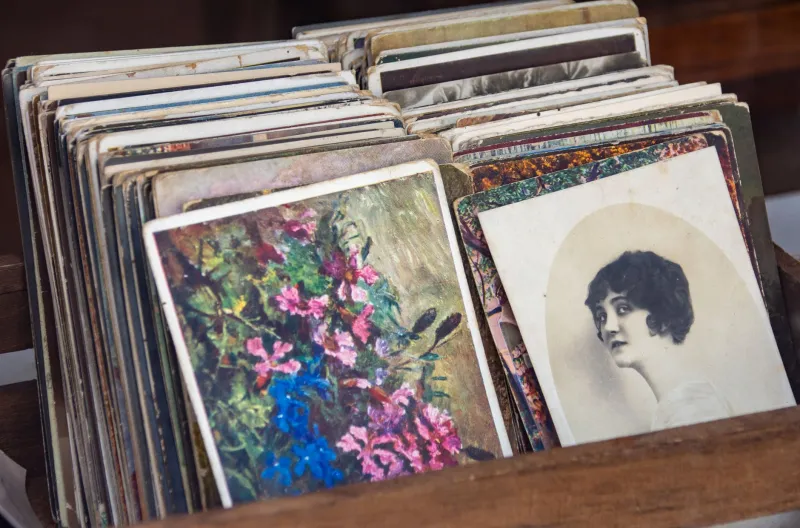
There's a particular thrill that comes with holding something old in your hands — the slight yellowing at the edges, the faint smell of decades past, the sense that someone else's eyes once lingered on the exact same image. Vintage pin-up memorabilia carries all of that and then some. A genuine 1940s Gil Elvgren calendar page or an original Esquire centerfold isn't just pretty wall art. It's a document. A cultural artifact. A tiny, glamorous piece of American history.
But here's the thing nobody warns you about when you first catch the collecting bug: the market is absolutely lousy with reproductions, and some of them are good. Like, really good. So before you drop serious cash on what the seller is calling "a mint-condition original," let's talk about how to do this right.
Know Your Artists, Know Your Era
The first thing any serious collector needs to develop is fluency in the major names. Alberto Vargas, Gil Elvgren, George Petty, Earl Moran — these are the Mount Rushmore of mid-century pin-up art, and their work commands the highest prices and attracts the most reproductions. Understanding each artist's signature style isn't just an intellectual exercise; it's your first line of defense.
Elvgren's women, for instance, have a warmth and softness that's almost photographic — his brushwork creates skin tones with remarkable depth. Vargas favored a dreamier, more elongated figure with a distinctly airbrushed quality. If something is attributed to one of these artists but the style feels slightly off — proportions a little awkward, colors a touch too saturated — trust that instinct. It's probably not what the tag says it is.
Spend time at legitimate auction houses, museum exhibitions, and established dealers before you start buying. The more genuine pieces you see up close, the faster your eye calibrates.
Paper Tells the Truth
Authentic vintage print materials from the 1940s and 1950s were produced on paper that simply doesn't exist anymore. Offset lithography from that era has a distinct dot pattern when viewed under a loupe — tiny, evenly spaced, and consistent in a way that modern inkjet or laser reproductions can't replicate. Pick up a jeweler's loupe (10x magnification is fine) and make it your best collecting companion.
Original calendar art will often show evidence of the calendar's former life — staple holes at the top, slight foxing (those small brown spots that appear as paper ages), and printing registration that isn't perfectly precise by modern standards. Reproduction prints are almost always too perfect. The colors are too vivid, the paper too uniform, the edges too clean.
For vintage magazines — think Esquire, True, Titter, or Beauty Parade — check the spine integrity, the paper weight, and any subscription labels or date stamps. A 1952 issue of Esquire should feel its age. If it smells like a printer's shop rather than a grandmother's attic, ask more questions.
Signed Publicity Stills: The Holy Grail (and the Minefield)
Signed photographs of pin-up era actresses and models — Betty Grable, Lana Turner, Jane Russell, Marilyn Monroe — are among the most coveted pieces in this collecting world. They're also among the most frequently faked.
Authentication here is not optional. Period. Full stop. Before purchasing any signed item above a couple hundred dollars, you want documentation from a reputable third-party authentication service. PSA/DNA and JSA (James Spence Authentication) are the two most respected names in the US market. A letter of authenticity from either organization won't guarantee perfection, but it dramatically reduces your risk.
Beyond authentication paperwork, learn the provenance story. Where did this piece come from? Who owned it before? A clear chain of custody — especially one that traces back to a studio, a personal estate, or a documented collection — adds both credibility and value.
Where the Good Stuff Actually Lives
Forget the idea that eBay is where serious collectors find serious pieces. It has its uses — you can absolutely score lower-value items and interesting ephemera there — but authenticated, high-value originals tend to move through more specialized channels.
Established auction houses like Heritage Auctions and Swann Auction Galleries regularly feature vintage Americana and pin-up art categories. Both publish detailed condition reports and have expert staff who vet submissions. Specialized dealers at major antique shows — the Scott Antique Markets in Atlanta, the Brimfield Antique Flea Markets in Massachusetts — can also be goldmines, especially if you develop relationships with vendors over time.
Estate sales remain one of the best-kept secrets for genuine finds. A family clearing out a house from someone who lived through the 1940s and 50s may not know what they have, which can work in a collector's favor. Approach these situations with honesty and fairness — offer reasonable prices, don't lowball grieving families — and you'll build a reputation that gets you called first when something good surfaces.
Building a Collection That Means Something
The most satisfying collections aren't just accumulations of expensive things. They have a point of view. Some collectors focus exclusively on a single artist. Others build around a specific format — say, nothing but original calendar pages. Others curate by era, focusing tightly on the World War II home-front period when pin-up culture was at its most culturally central.
Having a focus also makes you a smarter buyer. You develop deep knowledge in a narrower area rather than shallow knowledge across a wide one, which means you're harder to fool and better positioned to recognize genuine rarities.
The Ethics of the Hunt
One conversation that's gaining momentum in the vintage collecting community involves ethical sourcing — particularly around items featuring real women who may not have consented to decades of commercial afterlife. When purchasing signed photographs or promotional materials featuring real people, consider whether the piece treats its subject with dignity. Supporting dealers and auction houses that are transparent about provenance and treat the women depicted as historical figures worthy of respect, rather than just commodities, matters.
It's also worth investing in pieces that come with solid documentation rather than chasing unverifiable bargains. The vintage market has a long tail of items with murky histories, and a collection built on questionable provenance is a collection built on sand.
Building something real takes patience. It takes a loupe, a little skepticism, and a genuine love for the era. But when you're standing in front of a wall hung with authenticated pieces — each one a tiny, glamorous window into mid-century America — every careful step of that process will have been completely worth it.