Darling, You Were Born for This Room: How to Own the Pin-Up Persona at Any Retro Nightlife Event

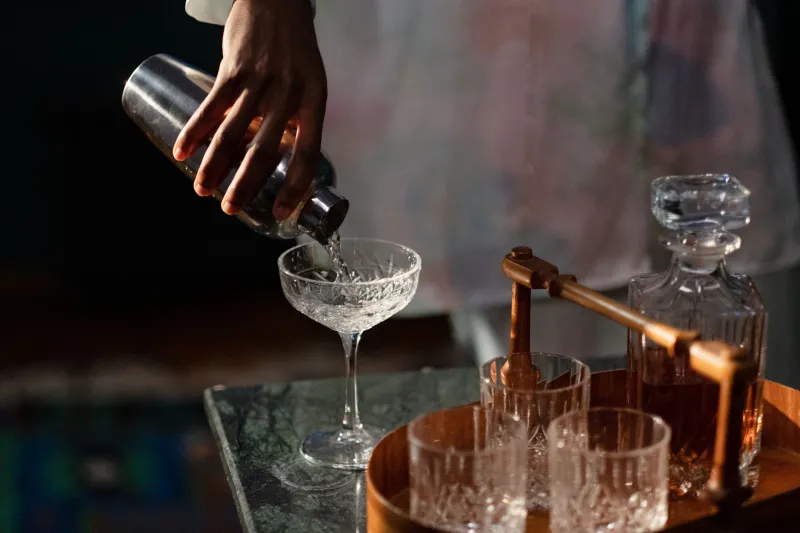
Photo by Photo by Jacob Blanck on Unsplash on Unsplash
Let's be honest for a second. You could show up to a vintage-themed swing night in the most immaculate 1950s ensemble ever assembled — the perfect seamed stockings, the cherry-red lips, the hair pinned within an inch of its life — and still somehow feel like a tourist. Because here's the thing nobody tells you when you're falling in love with retro culture: the look is the invitation. The persona is the party.
Across the country, from the speakeasy-style cocktail bars of New Orleans to the swing dance halls of Chicago's north side to the rockabilly festivals that take over small-town fairgrounds every summer, a genuine retro nightlife scene is absolutely thriving. And the women who truly light up those rooms? They've figured out something the Instagram tutorials can't teach you. They've built a character — warm, confident, a little theatrical, and completely their own.
This is your guide to doing exactly that.
Start With the Mindset, Not the Mirror
Pin-up culture at its golden-era peak — think the late 1940s through the early 1960s — wasn't really about looking perfect. It was about projecting ease. The women who embodied that era, the ones who made it iconic, moved through the world like they'd already decided they belonged everywhere they went. That's the first thing to internalize before you ever set foot in a retro venue.
Give yourself a small origin story. Nothing elaborate — just a sense of who your pin-up self is. Maybe she's a wisecracking cocktail waitress who moonlights as a lounge singer. Maybe she's a sharp-tongued secretary who knows more about everything than anyone gives her credit for. Maybe she's just a woman who genuinely loves a good highball and a faster song. The specifics don't matter nearly as much as the intention. When you walk into that room with a character in mind, it changes how you hold your shoulders, how you make eye contact, how you laugh. People feel that.
The Art of Mid-Century Conversation
Here's where a lot of people get tripped up. They've done the research on the clothes, maybe even the hair, but they walk into a vintage social event and immediately start talking about their Netflix queue. Which, fine! You're a whole modern person. But if you want to really inhabit the aesthetic, it helps to have a few conversational tools borrowed from the era.
Mid-century social etiquette was built around the art of making people feel seen. Compliments were direct and genuine — none of the hedged, half-apologetic praise we tend to default to now. If someone's shoes were extraordinary, you said so, fully and without qualification. Try it. Walk up to a stranger at a swing night, look them dead in the eye, and say, "Those shoes are absolutely killing me and I need to know where you found them." Watch what happens to the energy in that conversation.
The era also had a gift for playful banter — light, quick, self-deprecating in a way that was charming rather than self-defeating. Practice a few lines at home if it helps. Something like, "I've been working on my Lindy Hop for three years and I still look like a baby deer on roller skates" lands very differently than a straightforward "I'm not a great dancer." One of those is a conversation starter. The other is a conversation ender.
Reading the Room at Retro Venues
Not every vintage-themed event is the same kind of night, and part of owning the pin-up persona is knowing how to calibrate.
A swing dance night is a social event in the truest sense — it's participatory, physical, and community-oriented. The culture around these events tends to be genuinely welcoming to newcomers, but there are unspoken codes. Ask before you pull someone onto the floor. Rotate partners if the tradition of the evening calls for it. Bring energy but read the room on volume — some of these nights skew toward serious dancers who are there to work.
A vintage cocktail bar is a slower burn. These spaces reward the art of the slow reveal — settle in, get comfortable with your drink, let the atmosphere do some of the work before you start performing. The pin-up persona here is less about dazzle and more about depth. Know a little something about the cocktails of the era. A confident, "I've been on a serious sidecar kick lately — have you tried the one they make here?" signals that you belong in the room in a way that's quiet but effective.
A rockabilly or retro festival is the full theatrical production. These events are built for character — people are in costume, in community, in competition (friendly, mostly). Go bigger here. Bring props if you want. Strike poses. This is the environment where the full pin-up performance is not only welcome, it's expected.
The Personality Traits That Made the Era Magnetic
If you study the women who defined pin-up culture — not just the models and the calendar girls, but the actresses, the socialites, the nightclub regulars who made the scene — a few qualities show up consistently.
Warmth without desperation. They were genuinely glad to be wherever they were. That's different from performing happiness. It's a baseline contentment that makes everyone around you feel like the party is already good.
Humor that punched up, not down. The wit of the era was sharp but never mean-spirited toward the people in the room. Save the edge for abstract targets — bad luck, bad weather, the fact that nobody can agree on whether a Manhattan needs a cherry.
Genuine curiosity. Ask questions like you actually want to know the answers. Where did you find that jacket? Have you been coming to this event long? What's your favorite song they play here? People remember the ones who made them feel interesting.
A little mystery. You don't have to explain yourself completely. The pin-up archetype always held something back — a raised eyebrow, a half-smile, a story that got more interesting every time it was told. You're allowed to be a little unknowable.
Going Home With More Than Just Good Memories
The best thing about really committing to the pin-up persona at these events — beyond the obvious fun of it — is what it builds over time. The retro nightlife scene in America is genuinely community-driven. The people who show up consistently, who bring their full selves, who remember names and learn to dance and host the after-party — those are the people who become the scene.
And that, honestly, is the most authentic thing about vintage culture. It was never really about the clothes or the makeup or even the music. It was about the feeling of walking into a room where everyone had agreed, collectively, to make the night worth remembering.
You already know how to dress for that. Now you know how to be it.
See you on the dance floor, darling.