Flowers, Handwritten Notes, and Actually Showing Up: The Old-School Dating Rules Making a Comeback
Swipe right. Swipe left. Ghost someone you went on three dates with. Catch feelings, panic, pull back. Repeat until exhausted.
If that cycle sounds familiar, you're not alone. Dating in 2024 America has become so casual, so low-stakes, and so deliberately undefined that a growing number of singles are looking backward for inspiration. And what they're finding — in the courtship customs of the 1950s and early 1960s — is something that feels less like nostalgia and more like a blueprint.
Now, let's be clear upfront: we're not here to romanticize every aspect of mid-century dating culture. Some of it was rigid, some of it was exclusionary, and a lot of it was built on expectations that served one gender considerably better than the other. But strip away the problematic scaffolding, and what's left is a set of principles that modern daters — of every gender and orientation — are finding genuinely appealing. Intentionality. Effort. The courage to actually say what you want.
The Lost Art of Asking Someone Out Properly
In the pin-up era, asking someone on a date was a deliberate act. You asked a specific person to do a specific thing at a specific time. "Would you like to go dancing at the Starlight Ballroom on Saturday?" Not "hey we should hang out sometime" sent at 11 PM on a Wednesday.
This specificity communicated something important: I've thought about this. I've thought about you. I'm willing to put something concrete on the table and risk a real answer.
Modern daters who've adopted this approach report that it changes the entire energy of early courtship. A clear, direct invitation — whether it comes by text, by phone call, or (imagine this) in person — signals confidence and genuine interest. It also gives the other person something real to respond to, rather than the murky, noncommittal overtures that have become the default.
Handwritten Notes: Slow Communication in a Fast World
The love letter is not dead. It has just been on a very long hiatus.
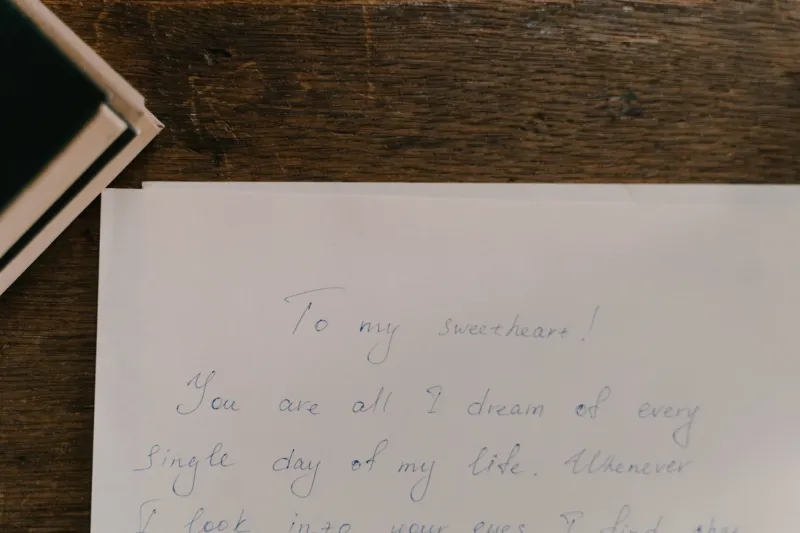
In the 1950s, written correspondence was a standard part of courtship — notes tucked into jacket pockets, letters sent between towns, cards left at front doors. The act of writing by hand communicated something that a text message structurally cannot: I took time on this. I thought about what I wanted to say. I chose these words specifically for you.
Handwritten notes are making a genuine comeback among younger American daters, and it's not hard to understand why. In a world of instant, effortless communication, a physical note is an anomaly. It requires intention. It requires sitting down, picking up a pen, and being present with your thoughts long enough to put them on paper.
You don't need to write a sonnet. A short note — "I had a really wonderful time last night. I'd love to see you again." — sent the day after a first date says more than a dozen carefully crafted texts. It's tangible. It can be held. It doesn't disappear into a thread of other messages.
Planning a First Date That Actually Means Something
The coffee-date-as-low-risk-screening-mechanism has its logic, but it has also drained a lot of the romance out of early dating. Coffee is fine. Coffee is also what you have with your coworker before a staff meeting.
Vintage courtship put real thought into the first date. The goal wasn't just to assess compatibility in the most efficient way possible — it was to show someone a good time. To demonstrate that you'd considered what they might enjoy, that you'd made a plan, that the evening was meant to be an experience rather than a checkpoint.
This doesn't have to be expensive. It has to be considered. A picnic in a local park with a thoughtfully packed basket. Tickets to a vintage film screening — many American cities have theaters that run classic films regularly. A visit to a local dance hall or swing dancing class, which are genuinely thriving across the country right now. The specific activity matters less than the fact that you thought about it.
Dressing for the Occasion (And Meaning It)
One of the more quietly radical things about vintage dating culture was the way both parties dressed for dates. Getting ready was a ritual, not an afterthought. A first date was an occasion that warranted your best dress, your good lipstick, your carefully set hair.
This wasn't about performing for someone else — it was about honoring the occasion. About saying, through your appearance, that this mattered enough to deserve your effort.
A lot of modern daters have started reclaiming this idea, and not just the women. Showing up to a date looking like you actually tried — like you thought about what you put on your body before walking out the door — is a form of respect. For your date, yes, but also for yourself.
Clear Intentions: The Part That Was Actually Revolutionary
Here's what vintage courtship got right that contemporary dating culture has almost entirely abandoned: clarity about what you were doing and where it was going.
When someone asked you to "go steady" in the 1950s, it meant something specific. There was a defined shift from casual dating to committed partnership, and it was communicated explicitly. Both people knew where they stood.
The modern equivalent — the "what are we" conversation that so many people dread having — is dreaded precisely because contemporary dating culture has made ambiguity the default. Keeping things undefined protects everyone from vulnerability. It also keeps everyone confused, anxious, and emotionally unavailable.
More and more American singles are deciding that the vulnerability is worth it. That saying "I like you, I'm interested in something real, and I'd like to know if you feel the same way" is not desperate or uncool — it's just honest. And honesty, it turns out, is its own kind of romantic.
What We Keep, What We Leave Behind
Reviving vintage dating customs isn't about wholesale importing a set of rules that were designed for a very different social context. It's about cherry-picking the elements that hold genuine value: thoughtfulness, effort, directness, and the willingness to treat another person like they deserve a real experience rather than a placeholder.
The pin-up era understood that romance was a performance — and not in a cynical way. In the theatrical sense. It required preparation, presence, and the courage to step into a role fully rather than hedging your bets at the door.
You can carry that energy into modern dating without a poodle skirt or a phone with a rotary dial. The flowers, the handwritten note, the actual plan for Saturday night — these things work because they communicate something timeless. I see you. I'm here. You're worth the effort.
And honestly? In 2024, that might just be the most radical thing you can do on a first date.