More Than a Pretty Picture: The Deep American Obsession with Pin-Up Culture and Why It Never Goes Away
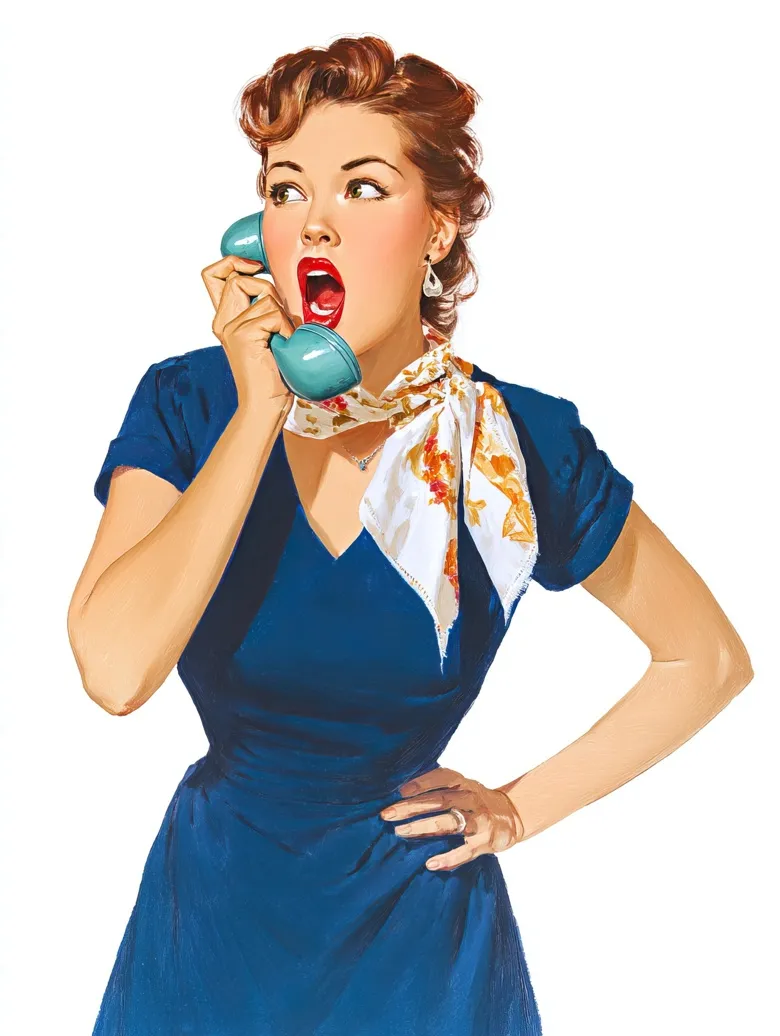
Photo: vintage 1950s pin-up art American nostalgia retro woman red lipstick mid-century, via storage.ko-fi.com
There's a framed Elvgren print hanging in a barbershop in Nashville. A hand-painted nose art recreation on a garage wall in Tucson. A retro pin-up calendar — the kind with soft-focus lighting and knowing smiles — sitting on a kitchen counter in suburban Ohio. You've seen these images your whole life, probably without giving them much thought. They're just there, woven into the fabric of American visual culture like Coca-Cola signs and Route 66 postcards.
But here's the thing about pin-up culture: it has never actually gone away. It has never needed a comeback, because it never left. And that staying power — that stubborn, charming, red-lipsticked refusal to fade — says something genuinely fascinating about who we are as Americans and what we reach for when the world gets heavy.
Born in Wartime, Built to Last
The golden age of pin-up art is typically traced to the 1940s, though the roots go back further — to the playful illustrated magazine covers of the early 20th century and the vaudeville-era performers who understood the power of a well-composed image. But it was World War II that gave pin-up culture its defining purpose and its emotional weight.
Artists like Gil Elvgren, Alberto Vargas, and George Petty created images that were reproduced by the millions — tucked into soldiers' wallets, painted on bomber fuselages, pinned to barracks walls from the Pacific Theater to the European front. The women in these paintings weren't just decorative. They were home. They were everything the men fighting overseas were fighting to return to: warmth, beauty, normalcy, the promise of an ordinary American life waiting on the other side of the war.
That's a heavy emotional load for a painting to carry. And yet it worked. The images became talismans.
Back stateside, the women who inspired those images — and the millions who identified with the aesthetic — were doing something quietly powerful of their own. Dressing up, keeping up appearances, maintaining a sense of beauty and femininity in the middle of rationing and fear. The pin-up look, with its structured silhouettes, bold lip colors, and carefully styled hair, was an act of defiance against despair.
You don't forget aesthetics that carry that kind of meaning.
The Psychology of the Romanticized Past
Nostalgia is a funny thing. Research in psychology consistently shows that nostalgic feelings — the warm, slightly bittersweet longing for a past era — function as an emotional buffer against anxiety, loneliness, and uncertainty. When the present feels overwhelming, the past offers a sense of continuity, of identity, of I know who I am because I know where I came from.
Pin-up culture is almost purpose-built to trigger that response in Americans. The imagery evokes an era — however idealized — of postwar optimism, economic expansion, drive-in movies, and a particular flavor of confident, uncomplicated femininity. Even people born decades after the 1950s feel a pull toward it because the aesthetic has been so deeply embedded in American visual culture through advertising, film, television, and art that it reads as universal rather than historical.
Dr. Priya Mehta, a cultural psychologist who has written about nostalgia and consumer behavior, describes it this way: "Certain aesthetics become shorthand for emotional states. When someone decorates with mid-century pin-up art or adopts the vintage style, they're not necessarily longing for the literal 1950s. They're accessing the feeling that imagery represents — confidence, playfulness, a sense that beauty was worth celebrating for its own sake."
That's a feeling that translates across generations, which explains why a 22-year-old in Brooklyn and a 65-year-old in rural Georgia can both have a genuine, personal connection to the same Elvgren print.
Pin-Up as Americana: The Collector's Obsession
Walk into any serious antique market in America — from the Rose Bowl Flea Market in Pasadena to the Brimfield Antique Flea Markets in Massachusetts — and you'll find pin-up ephemera commanding serious attention and serious prices. Original Vargas prints, vintage Esquire calendars, WWII-era nose art photographs, early pin-up playing cards — these aren't dusty relics. They're actively sought, hotly contested, and lovingly preserved.
Collector culture around pin-up art has exploded in the last two decades, fueled in part by the internet connecting enthusiasts who once might have felt like lonely outliers in their zip codes. Forums, specialized auction sites, and social media communities have created a global marketplace for vintage pin-up material, with particularly strong demand in the United States where the imagery is rooted in lived national history.
For many collectors, the appeal is explicitly patriotic. "This is American art," insists Marcus Webb, a retired Navy veteran and pin-up collector from San Diego who owns over 400 original pieces. "These images were part of the war effort. They meant something to real people in real historical moments. When I collect them, I feel like I'm preserving something important about who we were."
That sense of cultural stewardship — the feeling that pin-up imagery is worth preserving — speaks to how thoroughly the aesthetic has been absorbed into the American identity.
From Barracks to Living Rooms: The Home Décor Angle
One of the more unexpected chapters in pin-up culture's modern story is its full embrace by the mainstream home décor market. What was once considered edgy or niche — a vintage Petty Girl print, a retro pin-up throw pillow, a mid-century style illustration on a kitchen towel — is now readily available at retailers from Etsy to Target, and it's selling.
Interior designers who specialize in mid-century and retro aesthetics report that pin-up-adjacent imagery is among the most requested elements in vintage-style spaces. The color palettes — those warm teals, cherry reds, and creamy whites — complement mid-century furniture beautifully. The imagery adds personality without the coldness of abstract art. It tells a story.
For homeowners who grew up watching their parents or grandparents display similar images, incorporating pin-up elements into their own spaces is a form of continuity — a way of honoring family history through aesthetic choice.
Confidence as a Timeless Currency
At its core, pin-up culture celebrates something that never goes out of style: confidence. The women in those classic images — whether illustrated by Elvgren's painterly hand or photographed by mid-century photographers — aren't passive or demure. They're in on the joke. They know exactly what they're doing. There's an intelligence and a playfulness to the best pin-up imagery that has always set it apart from simple objectification.
Modern pin-up communities — the burlesque performers, the vintage lifestyle enthusiasts, the retro fashion bloggers — have latched onto this reading of the aesthetic with genuine enthusiasm. For many women who participate in contemporary pin-up culture, the appeal is explicitly about reclaiming that confidence. The elaborate costumes, the dramatic makeup, the carefully styled hair — it's armor. It's performance. It's joy.
"When I put on my victory rolls and my red lip, I feel like I can handle anything," says Savannah, Georgia-based burlesque performer and vintage model Claudette Beaumont. "There's something about the deliberateness of the look that makes you feel powerful. You didn't just roll out of bed. You chose this. You made yourself into something intentional."
The Aesthetic That Refuses to Apologize
In an era of constant aesthetic flux — where trends are born and buried within a single TikTok cycle — pin-up culture's longevity is almost defiant. It doesn't chase relevance. It doesn't need to. It simply exists, warm and knowing and beautifully composed, waiting for each new generation to discover it and make it their own.
That's the real secret of its endurance. Pin-up culture isn't a fixed, museum-piece artifact. It's a living aesthetic that absorbs new voices, new interpretations, and new meanings while retaining its essential emotional core: the celebration of beauty, confidence, and the very human desire to look at something lovely and feel, for a moment, that everything is going to be just fine.
America has always needed that feeling. And as long as it does, pin-up culture will be right there — winking from the wall, lipstick perfect, not going anywhere.
Here at Pin-Up 891, we wouldn't have it any other way.