Sequins, Solidarity, and Red Lips: How Queer Women Made Pin-Up Culture Their Own

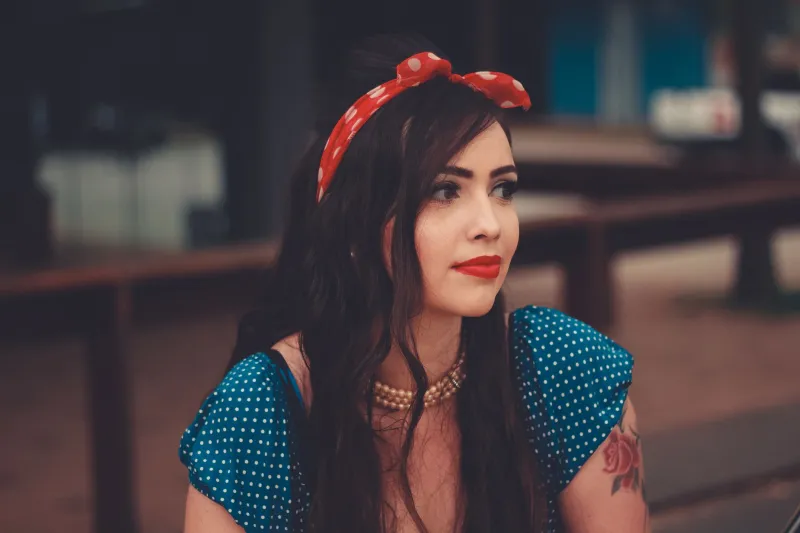
Photo by Photo by Annie Spratt on Unsplash on Unsplash
There's something deliciously subversive about a woman in a bullet bra and victory rolls winking directly at another woman. The original pin-up aesthetic — those glossy, idealized portraits of femininity plastered across WWII-era nose cones and garage calendars — was designed almost entirely with a straight male gaze in mind. And yet, somewhere between then and now, queer women decided to waltz right into that vintage fantasy, redecorate it entirely, and hand out the keys to whoever wanted in.
Welcome to the queer pin-up revolution. It's been brewing for decades, but in 2024, it's louder, bolder, and more sequined than ever.
A Legacy That Was Always a Little Queer
Here's the thing about pin-up culture that doesn't get talked about enough: it was never as straight as it looked on the surface. Behind the scenes of those cheesecake photo sessions were female photographers, stylists, and artists who poured their own complicated relationships with femininity into every frame. Some of the most celebrated pin-up models of the 1950s — Bettie Page chief among them — became icons not just for men, but for women who saw something in that unapologetic boldness they couldn't quite name at the time.
Bettie Page in particular has long held near-mythological status in lesbian and queer communities. Her willingness to perform femininity on her own terms, her playful dominance in imagery that was supposedly made for someone else's pleasure — there was always a wink in there that felt like it was meant for a different audience entirely.
"She wasn't performing for the camera," says Maya Delacroix, a Chicago-based pin-up photographer who shoots almost exclusively within LGBTQ+ circles. "She was performing with it. And queer women recognized that immediately. We've always known how to read between the lines."
Reclamation as Radical Act
Fast forward to today, and the reclamation of pin-up aesthetics by queer women isn't subtle anymore — it's the whole point.
Across the country, from Brooklyn loft studios to Austin burlesque stages to Portland vintage markets, queer women are stepping into corsets, painting on cat eyes, and striking poses that feel simultaneously nostalgic and entirely new. They're not imitating the original fantasy. They're interrogating it, stretching it, and stitching it back together in ways that reflect their own desires and identities.
Take the growing world of queer pin-up photography. Shoots that feature femme-femme couples, non-binary performers in classic 1950s silhouettes, and butch women in tailored rockabilly looks are popping up across Instagram and beyond. The aesthetic language — the seamed stockings, the high-waisted shorts, the perfectly arched brow — is unmistakably vintage. But the gaze has shifted entirely.
"When two women are in the frame together, it changes everything about what the image is saying," explains Delacroix. "Suddenly it's not about being looked at. It's about being seen — by someone who actually gets it."
The Burlesque Connection
If there's one performance space where queer pin-up culture has truly flourished, it's burlesque. The American neo-burlesque revival of the late 1990s and early 2000s was, from the very beginning, a deeply queer-inclusive space. Performers like Dita Von Teese brought mainstream attention to the art form, but in the underground clubs and DIY theater spaces where burlesque was really living, queer and trans performers were already doing something radical with the pin-up template.
Today, troupes like Velvet Hammer in Los Angeles and countless others scattered across the country regularly feature performers who use the vintage aesthetic specifically to explore queer desire, gender play, and femme identity. The striptease becomes something else entirely when the performer is in conversation with an audience that shares her experience — when the fantasy being dismantled and reconstructed is one they all grew up seeing but never quite seeing themselves in.
Jasmine "Red Velvet" Torres, a queer burlesque performer based in New York, describes her relationship with pin-up aesthetics as "a love letter to something that never loved me back — until I rewrote it."
"Growing up, I looked at those vintage images and felt this weird mix of longing and exclusion," she says. "The women were beautiful and powerful, but the whole setup was about attracting men. When I got on stage in a 1950s-style gown and started performing for a queer audience, it felt like I was finally finishing a sentence that had been left hanging for seventy years."
Femme Identity and the Pin-Up Aesthetic
Within lesbian and queer communities, the concept of femme identity — a deliberate, often politicized expression of femininity — has long had a complicated relationship with mainstream beauty standards. The pin-up aesthetic, with its exaggerated curves, glamorous styling, and unapologetic sexiness, has become one of the key visual languages through which femme identity gets expressed and celebrated.
For many queer femmes, vintage styling isn't about conforming to a heterosexual ideal of attractiveness. It's about owning femininity so completely and so loudly that it becomes an act of resistance. The red lip isn't for him. The cinched waist isn't for him. The whole gorgeous, carefully constructed look is for her — or for them, or for herself.
"Femme visibility is a real thing in queer spaces," says Torres. "People sometimes assume that because you're dressed in a way that reads as conventionally feminine, you must be straight. Leaning into pin-up aesthetics is almost like saying, 'No, actually, this is queer as hell and I'm doing it on purpose.'"
Beyond the Binary: Trans and Non-Binary Pin-Up Culture
The queer pin-up conversation extends well beyond lesbian identity. Trans women and non-binary folks have also found deep meaning in the vintage aesthetic, often using it as a framework for exploring and celebrating gender on their own terms.
For many trans women, the hyper-feminine imagery of classic pin-up culture offers a kind of affirmation — a visual vocabulary for womanhood that feels joyful and celebratory rather than clinical or contested. For non-binary performers, mixing and matching pin-up elements with unexpected styling choices creates something entirely new: a retro aesthetic that doesn't ask you to pick a side.
The result is a pin-up culture that in 2024 looks nothing like the original and everything like the spirit behind it — bold, self-possessed, and completely unwilling to apologize for taking up space.
What This Means for the Aesthetic Going Forward
Pin-up culture has always survived by evolving. It absorbed rock and roll in the '50s, feminist critique in the '70s, and the DIY ethos of the internet age in the 2000s. Its latest evolution — through the hands of queer women, trans performers, and non-binary artists — might be its most interesting chapter yet.
The vintage imagery still carries all the glamour and nostalgia that makes it so compelling. But it carries something new now too: the knowledge that it belongs to anyone brave enough to step into the frame.
And honey, there's plenty of room in the picture.