The Women Behind the Paper Dolls: Recovering the Real Stories of America's Pin-Up Models

Photo: NASA, ESA, C.R. Robert O’Dell (Vanderbilt University), G.J. Ferland (University of Kentucky), W.J. Henney and M. Peimbert (National Autonomous University of Mexico) Credit for Large Binocular Telescope data: David Thompson (University of Arizona)
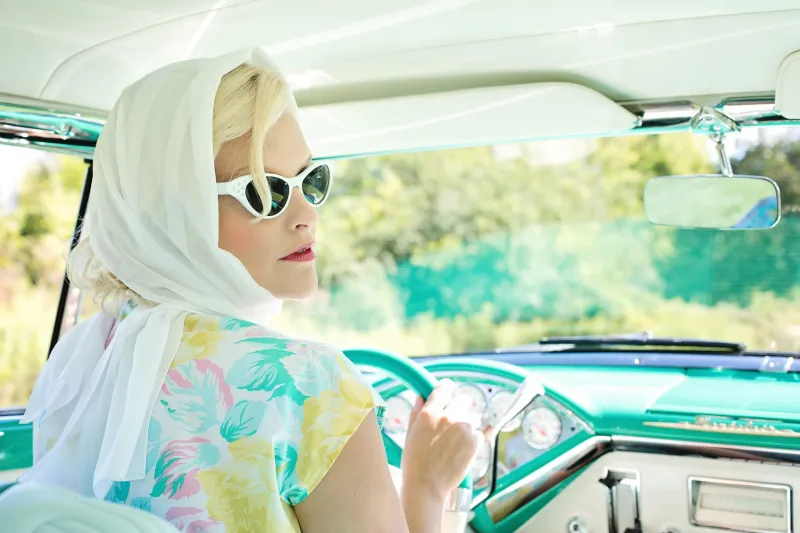
Ask anyone to picture a 1940s pin-up and you'll likely get a blank smile, a victory roll, and a name like Betty or Rita. But here's what rarely makes it into the coffee-table books: the women who inspired those famous illustrations were, in many cases, working professionals who negotiated their own fees, managed their own careers, and turned a modeling gig into genuine financial independence in an era when most American women had precious few routes to either.
The mythology has always been easier. The reality, historians say, is far more interesting.
More Than a Pretty Face on a Calendar
The golden age of pin-up art — roughly the early 1940s through the late 1950s — was an industrial-scale enterprise. Artists like Alberto Vargas, Gil Elvgren, and Petty churned out thousands of images for calendars, advertisements, and the famous morale-boosting artwork that followed GIs overseas. Somebody had to model for all of it.
That somebody was frequently a working woman with a portfolio and a business sense. Many were professional models who posed for the reference photographs artists later painted from. Others were dancers, actresses between jobs, or women recruited straight off the streets of New York and Chicago who discovered that a morning of posing could pay better than a week of clerical work.
Collectors who dig through the original reference photographs — many of which have surfaced at auction and in archives over the past two decades — often find names penciled on the back. Not starlets. Just women. Women who showed up, worked the pose, cashed the check, and went home to lives the artwork never recorded.
Separating the Legend From the Paystub
Pin-up history is thick with apocrypha. The most persistent myth is that the models were all anonymous nobodies, or conversely, that they were all secretly famous starlets. The truth sits squarely in between, and it's more revealing than either story.
Some models did become recognizable faces — a handful parlayed pin-up work into film contracts or nightclub careers. Others posed once or twice and vanished from the record entirely. What the verified paper trail shows, time and again, is women treating modeling as a trade: negotiating rates, signing releases, sometimes refusing poses they found too risqué and building reputations as reliable professionals.
There's also the matter of who profited. The artists held the fame; the agencies held the contracts. But the models held something too — wages, however modest, earned on their own terms, in an economy that offered women few opportunities to earn them. For a married woman or a widow in 1945, a pin-up gig wasn't a lark. It was income.
The Historians Doing the Digging
A small but dedicated community of researchers, archivists, and collectors has spent years tracking down the women behind the paintings. They cross-reference model releases, match reference photographs to finished artwork, and — when they get lucky — track down descendants who have boxes of letters and pay receipts in an attic.
What emerges from that work is a portrait of ordinary women navigating an extraordinary industry: women who sent money home to family, who used modeling income to fund music lessons or a down payment, who looked back on the work decades later with a mix of pride and pragmatism. Some spoke of it warmly. Some never mentioned it at all. All of them, the historians emphasize, deserved better than to be remembered as wallpaper.
Why It Matters Now
There's a modern instinct to either romanticize the pin-up era or write it off entirely. Both take the easy road. The harder, truer story — the one the archival work keeps surfacing — is about women exercising whatever agency the era allowed, and often a good deal more than we assumed.
When we talk about pin-up culture today, it's worth remembering that the women in those frames weren't muses who happened to be paid. They were wage earners who happened to become muses. That distinction doesn't diminish the art. It completes it.
So the next time a calendar girl winks at you from a reproduction poster, consider the woman she was based on: up early, hair set, contract in hand, earning her own keep in a country that wasn't sure it wanted her to. She wasn't just drawn that way. She lived that way.