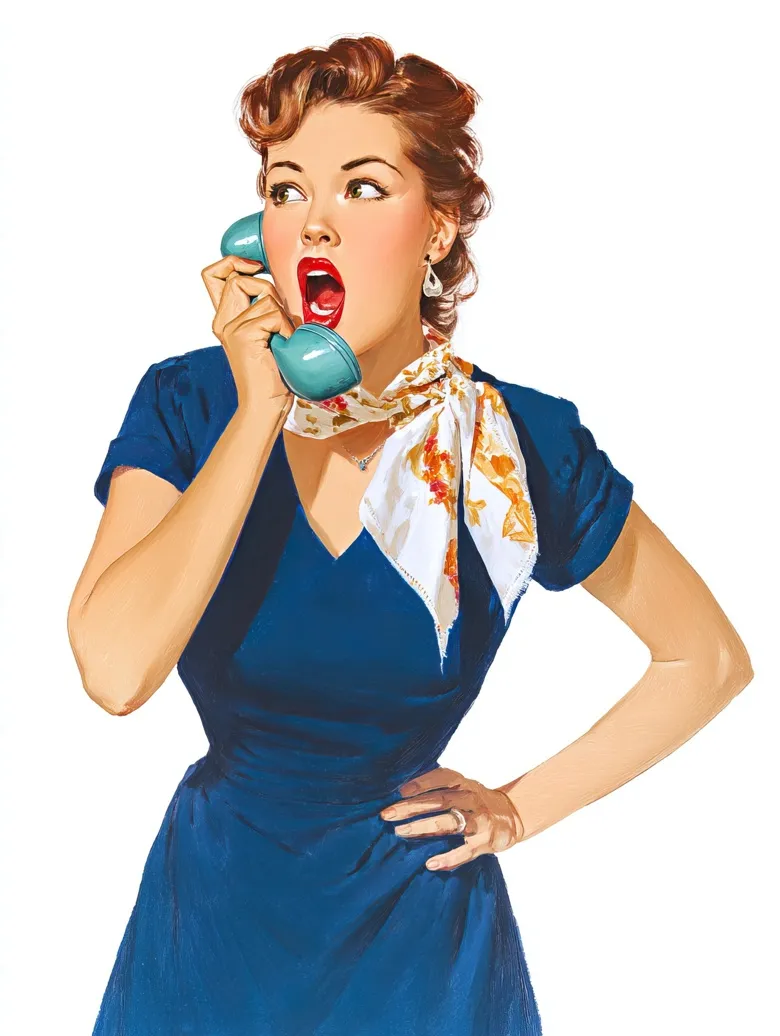
Red Lips, Real Power: How Today's Pin-Up Women Are Turning Vintage Vibes Into Serious Careers
There's a moment — usually somewhere between the third swipe of red lipstick and the careful pinning of a victory roll — when a woman transforms. Not into someone she's pretending to be, but into someone she's choosing to become. For a growing community of American women, that transformation isn't just a Saturday afternoon hobby. It's a business model, a brand, and a bona fide career.
The modern pin-up professional is a creature the 1950s never saw coming. She's booking clients, building audiences, negotiating contracts, and running the kind of operations that would make any MBA student jealous — all while looking like she stepped off a vintage Coca-Cola advertisement. And she's doing it entirely on her own terms.
Not Your Grandmother's Pin-Up (Or Maybe Exactly That)
Let's get one thing straight right away: the women leading this movement aren't ignoring the complicated history of pin-up culture. They're engaging with it head-on. The classic pin-up image — popularized by artists like Gil Elvgren and Alberto Vargas during the 1940s and '50s — was largely created for a male gaze and served a very specific cultural function. Wartime morale, advertising, fantasy. The women in those images had limited say in how they were portrayed or consumed.
Today's pin-up professionals are flipping that script entirely. They're the photographers, the directors, the business owners, and the talent — often all at once. The aesthetic remains rooted in that mid-century glamour, but the agency behind it is categorically different.
"I fell in love with the look before I understood the history," says Marcelline, a New Orleans-based pin-up model and vintage styling coach who has built a social media following of over 200,000 across platforms. "Once I did the reading, I didn't want to abandon it — I wanted to reclaim it. There's something radical about taking an image that was designed to objectify women and saying, 'Actually, this is mine now.'"
That reclamation isn't just philosophical. It's financial.
The Business of Beautiful
The pin-up economy is more robust than most people realize. Specialty photography studios offering vintage-style boudoir and pin-up sessions have multiplied across the country over the past decade, with cities like Nashville, Portland, Austin, and Chicago now hosting multiple competing operations. These aren't cheap afternoons — full pin-up photography packages routinely run between $500 and $2,500, and many studios report waitlists stretching several months.
Makeup artists who specialize in vintage techniques — the precise cat-eye flick, the sculpted brow, the perfectly blended Victory Red lip — command premium rates at weddings, film sets, and editorial shoots. Some have parlayed their expertise into online teaching platforms, selling courses that reach thousands of students who want to master the look from their own bathrooms in Boise or Baltimore.
Then there are the entrepreneurs who've built entire lifestyle brands around the aesthetic. Think curated vintage clothing shops, retro-themed subscription boxes, handmade reproduction swimwear, and accessory lines designed to fill the gap between what's available at your average mall and what actually looks period-accurate on a sunny afternoon at a rockabilly festival.
"People used to ask me when I was going to get a real job," says Dottie, who runs a Chicago-based vintage reproduction clothing label she started from her kitchen table in 2017. "Now I have four employees, a production studio, and a waiting list. The aesthetic was never the problem. The assumption that pretty things can't also be serious business — that was the problem."
Boardrooms Are Getting a Vintage Upgrade
Here's where it gets really interesting. Pin-up aesthetics aren't staying confined to photography studios and craft fairs. A notable subset of women are bringing vintage-inspired presentation directly into corporate and professional spaces — and discovering that it works.
Consider the growing number of female executives, attorneys, real estate agents, and creative directors who've adopted a signature vintage-influenced personal style as part of their professional identity. The structured silhouettes, the polished hair, the deliberate attention to detail — these elements read as put-together in any boardroom, even if the inspiration is firmly rooted in 1955.
Psychologists who study clothing and professional perception have noted that a distinctive, consistent personal aesthetic can actually strengthen professional credibility. When someone looks intentional — when their appearance communicates that they've made considered choices — it signals competence and confidence to colleagues and clients alike.
For women who've built careers in male-dominated industries, the vintage pin-up aesthetic also carries an unexpected layer of armor. It's undeniably feminine, which means it refuses to apologize or minimize. It says: I know exactly who I am, and I'm very good at my job.
The Community That Built the Career
No conversation about the modern pin-up professional is complete without acknowledging the community infrastructure that makes these careers possible. Online spaces — Facebook groups, Instagram communities, dedicated forums, and increasingly TikTok — have connected women across the country who share both an aesthetic passion and an entrepreneurial spirit.
These communities function as informal professional networks. Members share vendor recommendations, collaborate on photoshoots, refer clients to one another, and workshop business challenges with people who genuinely understand the niche. A vintage makeup artist in Phoenix might find her biggest client referral comes from a pin-up photographer in Vermont she's never met in person.
Regional and national events like Viva Las Vegas, the Lonestar Round Up in Austin, and various rockabilly weekends scattered across the country serve as annual industry convergences where relationships are built, collaborations are born, and careers are quietly launched over plates of diner food and glasses of something bubbly.
What Comes Next
The trajectory here is pretty clear, and it's pointing upward. As vintage aesthetics continue to cycle through mainstream fashion — and they reliably do, every decade or so — the women who've been living and working in this space full-time are positioned as the authentic experts. They're not chasing a trend. They are the source.
The modern pin-up professional has done something genuinely impressive: she's taken an image with a complicated past, applied her own intelligence and ambition to it, and built something lasting. She hasn't sanitized the history or pretended the complications don't exist. She's just decided that the aesthetic belongs to her now.
And honestly? Looking at the waitlists, the follower counts, and the thriving small businesses these women are running, it's hard to argue with that conclusion.
The red lipstick isn't just a fashion choice anymore. It's a business card.